Field notes
- One “self-fertile” tree does not guarantee grocery yields. Cross-pollination planning is coursework.
- Scab-susceptible heirlooms in western WA because “heritage” is how you enroll in a spray program you claimed to hate.
- Mulch volcanoes against trunks feed voles and rot. Keep mulch as a ring, not a turtleneck.
- Never pruning because “nature knows” produces high, unmanageable fruiting wood for birds with better access.
- High N on young trees grows whip, delays fruiting, and increases disease soft tissue. Leaf poles are not orchards.
Learning objectives & crop biology
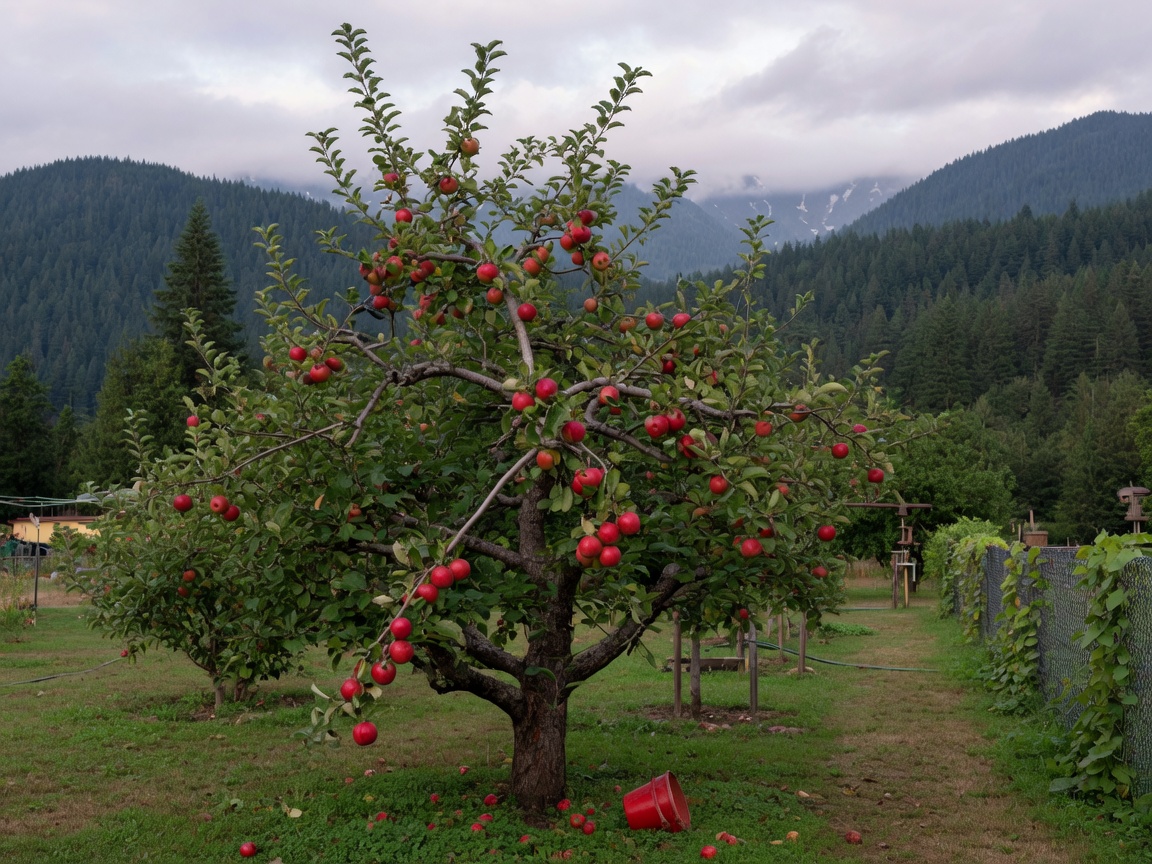
Western foothill success requires disease-resistant cultivars where possible, full sun, airflow, and rootstock matched to space and support. Most cultivars need a compatible pollen partner with overlapping bloom. Self-fertile labels reduce—but do not always eliminate—the value of a partner or nearby crabapple.
Failure mode
Planting eastern-Washington nostalgia cultivars into marine fog belts without resistance traits is a climate mismatch. Charm is not a fungicide.
Irradiance
≥8 h full sun. Reduced light lowers floral initiation and slows canopy drying. North of hop towers and under fir canopies is not orchard siting.
Lab note: Trees do not “find the light.” You place them in it.
Edaphic requirements
Deep, drained loam; pH ~6.0–7.0. Chronic wet feet fail. On clay, broad mounds—not clay bathtubs of fluffy backfill (sump effect). Organic matter yes; saturation no.
Irrigation protocol
Years 1–3: deep weekly irrigation in dry weather—order of 20–40+ L/week depending on tree size and soil (wet the root ball zone thoroughly). Mature trees: drought and fruit-sizing irrigations. Mulch outward from trunk. Drip rings preferred.
Lab note: “It rained last month” is not an August root-zone status report.
Nutrient management
Modest spring inputs. Excess N → vegetative excess, delayed cropping, more disease. Fertilize on growth evidence, not ritual. No late-summer high N that delays dormancy.
Phenology — North Bend
- Plant bare-root dormant (late winter–early spring).
- Dormant prune late winter; summer prune for vigor control when indicated.
- Harvest by cultivar maturity indices (background color, seed color, detachment), not vibes.
Advanced practice: training, thinning, scab
Train to open center or central leader per rootstock/habit. Thin heavy sets for fruit size and return bloom. Prefer scab-resistant genetics; sanitize leaves; open canopies for drying. Codling moth/apple maggot management may require monitoring—use regional extension guidance, not social folklore.
Graduate extension: rootstock & spacing
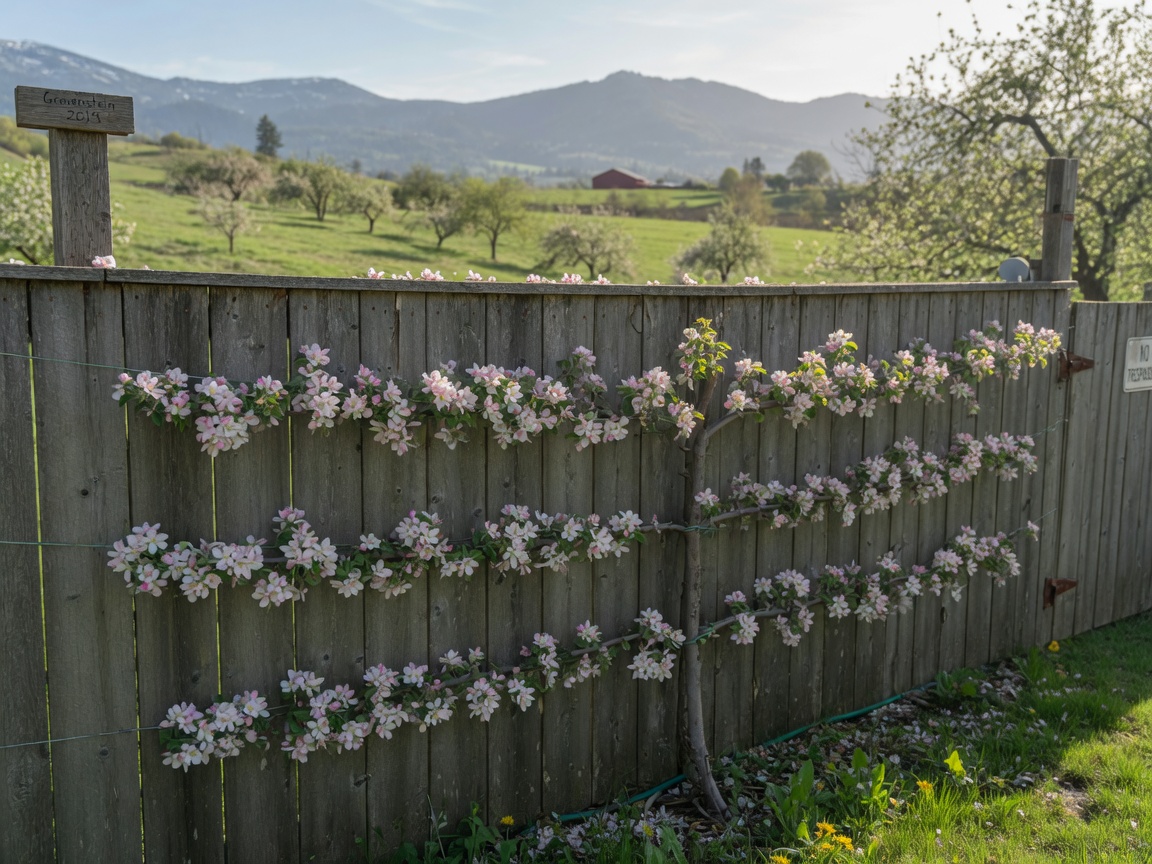
Dwarfs need permanent support and tighter spacing; semi-dwarfs fit many home lots. Design for mature width you own. Espalier multiplies heat and forces pruning competence.
Biotic stress
Scab, mildew, fire blight (present but often less dominant than on pear), aphids, codling moth, deer, voles. Trunk guards. Pests module.
Harvest & storage
Lift-twist detachment when mature. Cool storage. Early cultivars are not long-keepers—process or eat; do not run a fridge science fair.
Unit close
Resistant cultivar · pollen plan · sun · drainage · restrained N · real pruning. Skip the sequence and maintain an expensive stick with occasional wormy souvenirs.