Field notes
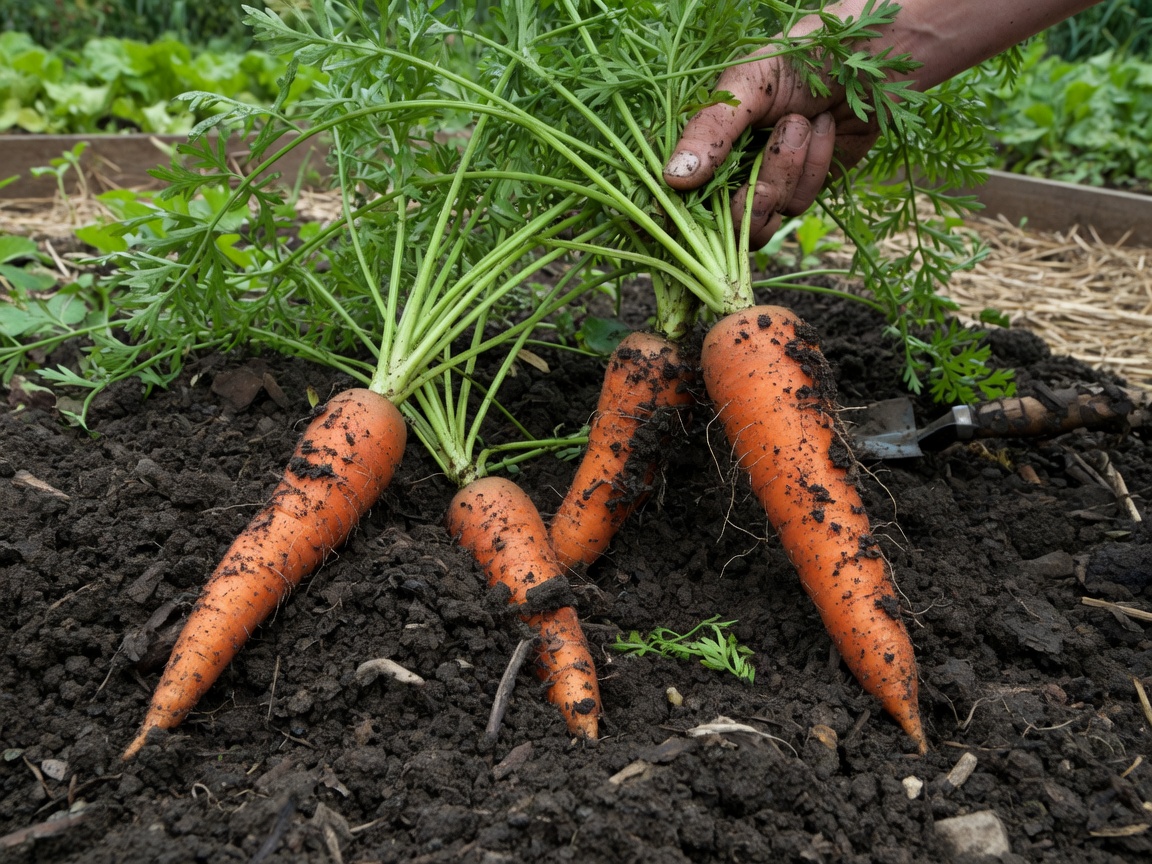
- Transplanting carrots produces deformed roots. Direct seed or do not claim you followed protocol.
- Fresh manure in the carrot row yields hairy, forked roots. That outcome is documented, not mysterious.
- Refusing to thin because seedlings are “cute” yields pencils. Density is a management variable.
- Crusted seedbeds are free contraception for carrot stands. Maintain surface moisture through emergence (often 14–21 days).
- Long Nantes types in rocky clay are a cultivar–site mismatch. Choose shorter types or fix the profile.
Learning objectives & crop biology
Carrots require deep unimpeded rooting volume and steady moisture for quality storage roots. On North Bend clay, use raised beds or short/Chantenay architecture. Germination is slow; surface crust is lethal to emergence. High N favors shoot over storage-root allocation.
Failure mode
Beginners blame “bad seed” for forked roots while ignoring stones, clods, and last week’s manure flex. Re-read the soil module.
Irradiance
6–8+ h full sun. Shade slows growth and can reduce sugar accumulation. Do not site under hop towers and call it polyculture.
Lab note: Carrots do not photosynthesize intention. Measure sun hours.
Edaphic requirements
Loose profile free of clods/rocks in the top 25–30 cm; pH ~6.0–6.8. No fresh manure. Fine seedbed mandatory. “I’ll force them through clay” is not a tilth strategy.
Irrigation protocol
Even seedbed moisture until emergence; then ~25 mm/week steady. Drought–flood cycles split roots. Light mulch after thinning stabilizes the surface.
Lab note: Two weeks of neglect followed by drowning is not “deep watering.” It is stress cycling.
Nutrient management
Low–moderate N; adequate P/K for root development. Prior-season compost often outperforms freshly enriched disaster beds. Side-dress only if tops are pale and stunted—not if tops already dominate a barren root zone.
Phenology — North Bend
- Sow March–June as soil allows; succession every 2–3 weeks.
- July sowings for fall harvest often excellent—use them.
- Mulched overwintering possible for advanced practice.
Advanced practice: stand establishment
Thin to 4–8 cm depending on type. Marker radishes acceptable if removed early. Pelleted seed improves singulation for people who fight tiny seed. Light frost can improve fall sweetness via carbohydrate concentration.
Graduate extension: germination control
Prevent crust, maintain film of moisture, consider shade cloth or board methods carefully removed at emergence. Carrot seed has higher standards than most beginners bring to a bed.
Biotic stress
Carrot rust fly (row cover), wireworms, seedling slugs. Green shoulders: light on crowns—hill or mulch. Forking: structure. Stop calling structure “mystery genetics.”
Harvest & storage
Harvest at cultivar shoulder diameter. Loosen soil before pull. Remove tops for storage; hold cold and humid. Warm dry chaos produces rubber roots.
Unit close
Tilth · direct seed · steady water · thin hard · no fresh manure. Miss those and enjoy abstract root sculpture.