Field notes
- Wet clay hollows produce winter mortality on schedule. Site selection is the exam.
- Rosemary is not basil. Daily irrigation after establishment is pathogen hospitality.
- North shade yields sparse, low-oil growth. Full sun is not optional décor advice.
- Container culture you can shelter beats heroic in-ground plantings you refuse to redesign.
- Hard cuts into ancient wood rarely reboot the plant. That pruning video lied to you—or you lied to the wood.
Learning objectives & crop biology
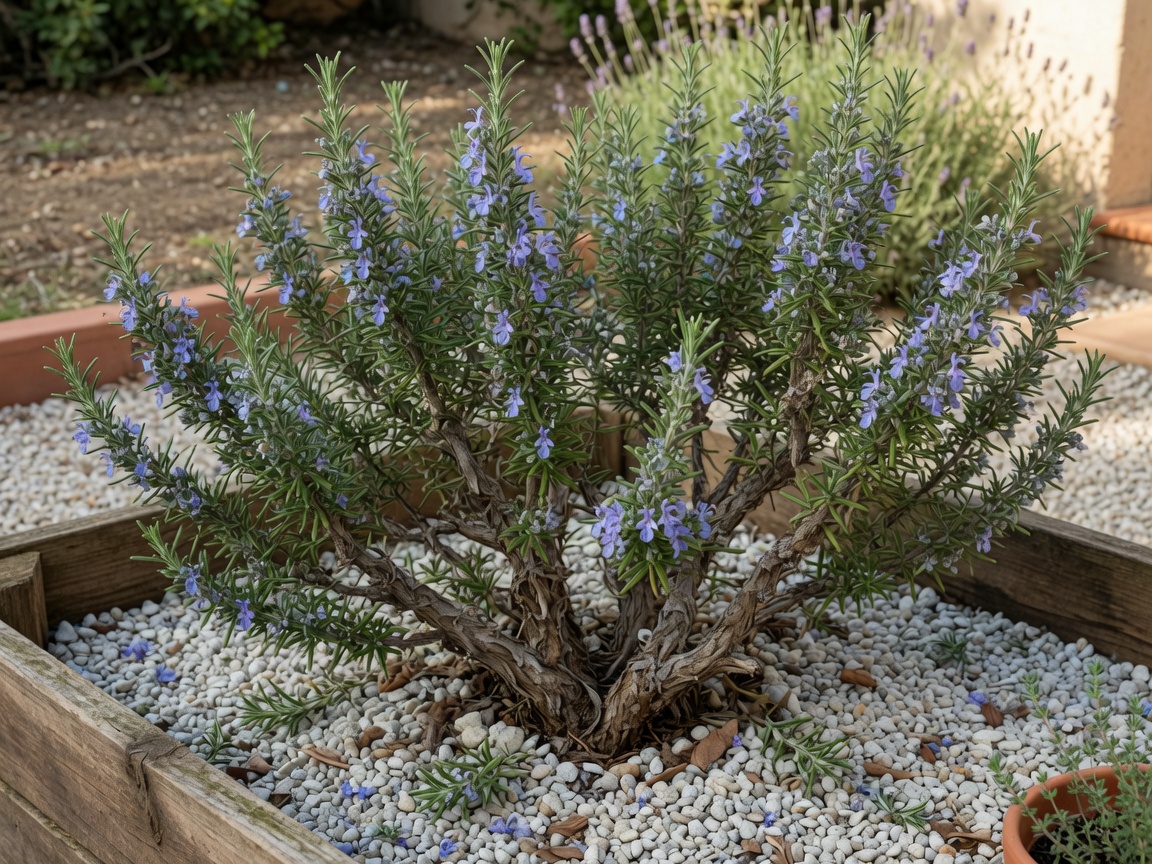
Woody perennial herb of Mediterranean origin. Hardy-ish in 8a with perfect siting; unreliable in saturated soils. Select documented hardier cultivars, plant in spring, and treat container mobility as a legitimate winter strategy under atmospheric-river regimes.
Failure mode
Annual repurchase of the same cultivar for the same swamp is not gardening. It is a subscription to identical outcomes.
Irradiance
Full sun, 6–8+ h. Oil density and shoot hardiness track light. Deep shade is a failed trial.
Lab note: “Afternoon sun sometimes” is not a light regime you can defend in lab.
Edaphic requirements
Sharp drainage; pH roughly 6.5–7.5; moderate fertility only. Raised beds, slopes, or gritty container media. Organic matter without saturation is fine; permanent wet is not.
Irrigation protocol
Establish with deep weekly water, then dry-down cycles. Mature plants: irrigate when top 5–8 cm dry—often every 7–14 days in summer ground culture. Winter: rain usually sufficient; exclude standing water.
Lab note: Daily misting is not care. It is a spa package for fungi.
Nutrient management
Light spring feed max. Excess N softens tissue and dilutes flavor. Compost top-dress beats monthly liquid theater.
Phenology — North Bend
- Plant mid–late spring into workable, drained soil.
- Harvest year-round in mild windows; peak growth late spring–summer.
- Softwood cuttings in summer for clonal insurance.
Advanced practice: winter insurance
South walls, gravel mulch, no bark volcanoes. Move or wrap containers for arctic outflows. Prune lightly after flowering.
Graduate extension: pot culture protocol
≥5 gal, gritty mix, elevated drainage, full soak then dry-down. Trade summer monitoring for winter mobility—often the highest-survival design in this valley.
Biotic stress
Root rot, powdery issues in shade, spittlebugs. Deer usually low. Primary risk remains hydrology and shade.
Harvest
Tip-prune to branch. Fresh or dried. Old woody stems: skewers, not fine mince.
Unit close
Sun · grit · dry-down · south microclimate or pot. Miss those variables and practice loss with aroma.