Field notes
- July sowings “to see what happens” produce flower stalks and bitterness. That is the result. Write it down.
- “Bolt-resistant” is not bolt-proof. Marketing copy is not a climate control system.
- If slugs erased the stand overnight, welcome to western Cascades malacology. Protect seedlings or stop acting shocked.
- Yellow leaves are deficiency, hypoxia, or both—not “fall color” on an annual green.
- Fall plantings regularly outperform late-spring bravado. The calendar is smarter than your mood.
Learning objectives & crop biology
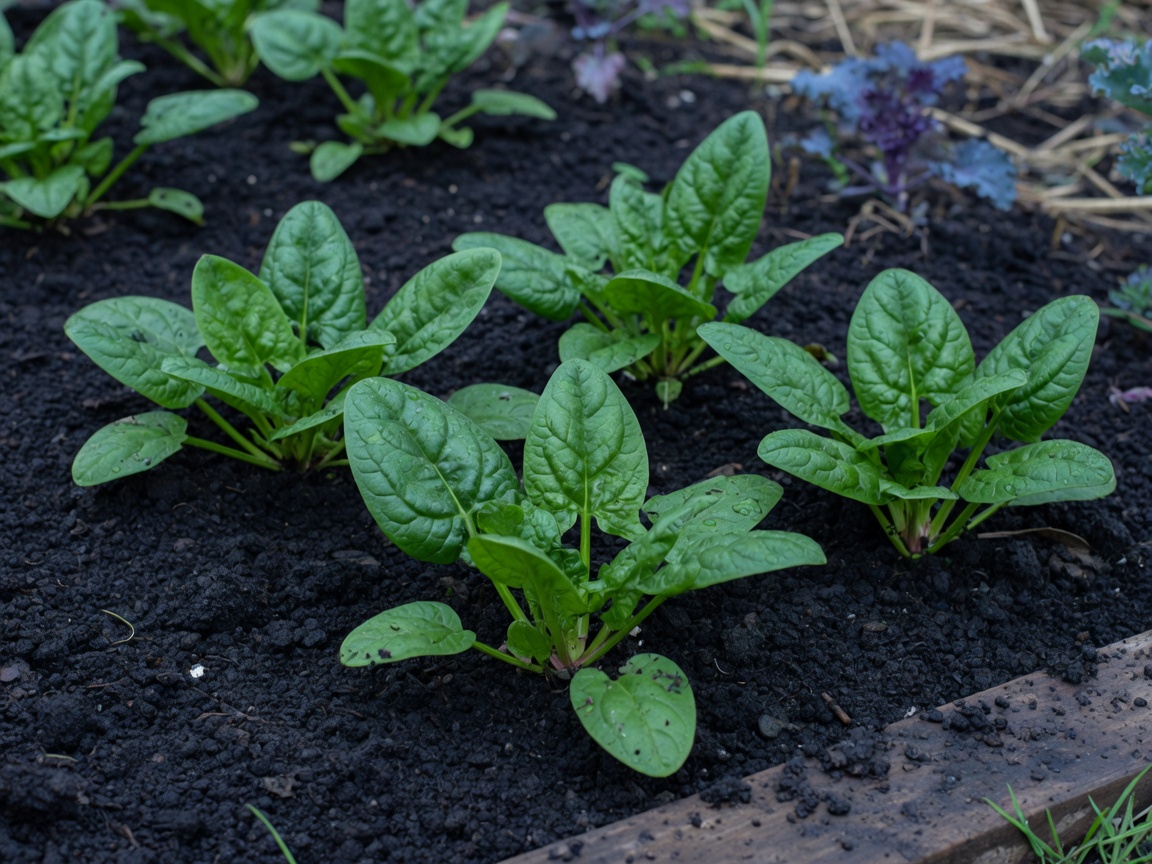
Optimal germination roughly 7–20°C soil. Vegetative growth prefers cool conditions; rising temperature plus lengthening days triggers bolting. Spring production is a race; fall production often wins on quality. Select spring bolt-resistant cultivars deliberately. Savoy vs. smooth leaf is texture, not morality.
Failure mode
Students who sow a cool-season crop into long warm days and then announce the variety is “bad” have misassigned blame. Phenology graded them first.
Irradiance
Full sun in cool months; light afternoon shade as temperatures rise. Shade cloth under heat is competent culture. Midsummer bare-ground spinach without protection is performance art.
Lab note: Full sun in a heat wave does not make you tough. It makes bitter leaves and a seed stalk.
Edaphic requirements
Fertile, moist, drained, high OM; pH ~6.5–7.0. Acidic compacted clay reduces performance. N drives leaf yield. Prevent surface crusting at emergence—tiny seedlings are not jackhammers.
Irrigation protocol
Even moisture: ~25–40 mm/week equivalent, often as 2–3 irrigations to protect the seedbed surface. Drought accelerates bitterness and bolting. Waterlogged freeze-thaw mud kills stands while you call it “nature.”
Lab note: Wilting “to build character” builds biomass for the compost pile.
Nutrient management
Steady N supply. Compost-rich bed; side-dress 3–4 weeks post-emergence if growth stalls pale. Heavy soluble N immediately before a leaching rain is how you fertilize the ditch.
Phenology — North Bend
- Spring: sow when soil workable (often March); succession every 10–14 days into late April, then stop heroics.
- Fall (primary recommendation): late July–September; protected winter culture optional for advanced students.
- Direct seed standard; transplants acceptable if you enjoy paying extra.
Advanced practice: harvest systems & disease
Cut-and-come-again outer leaves or whole rosettes. At central elongation, harvest out—bolted tissue is coursework, not salad. Downy mildew: resistant cultivars, reduce prolonged leaf wetness, sanitation. Row cover post-sow limits birds and flea beetles.
Graduate extension: photoperiod sensitivity
Long-day response explains May failures better than “bad seed.” Fall succeeds as days shorten. If you fail every May, change the term—not the brand of crystals in your potting mix.
Biotic stress
Slugs, leaf miners, aphids, birds. Pests module. Beer traps alone are not an IPM program.
Harvest & postharvest
Baby leaf ~3–5 weeks; mature soon after. Morning harvest; rapid cooling. Spinach wilts faster than your attention span at the nursery—cold chain matters.
Unit close
Cool windows · steady N · even water · harvest before bolting. Everything else is a flower stalk with a story.