Field notes
- Shade “groundcover” plantings become fungal experiments. Full sun is required coursework.
- Rich, constantly wet beds produce leggy, low-flavor growth that winter finishes off.
- Scalping into bare wood because a reel said “hard prune” produces sticks, not mats.
- Neglect only works after drainage exists. Neglect in a swamp is still a swamp.
- Fancy cultivars in damp corners die first. Common culinary thyme in hot grit grades higher.
Learning objectives & crop biology
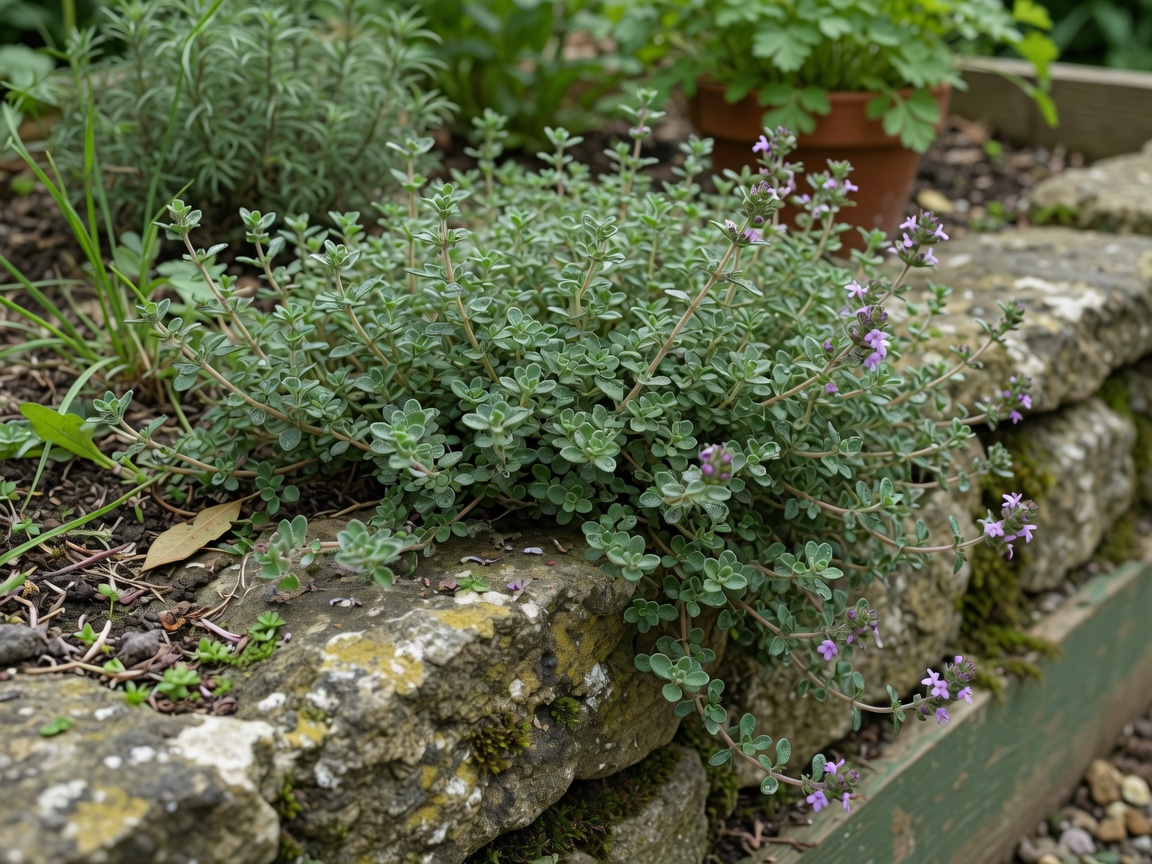
Culinary thyme is a low woody perennial adapted to well-drained, high-light sites. Excellent edging plant; poor performer in wet shade. Creeping types for paths tolerate traffic but may show winter dieback under chronic wet—plan replacements.
Failure mode
Small leaves do not mean small site standards. Size is not a free pass for clay and shade.
Irradiance
Full sun, 6–8+ h. Shade produces sparse woody frameworks with little culinary value.
Lab note: If you need artificial light to find the sun in that bed, thyme has already withdrawn.
Edaphic requirements
Lean–moderate fertility, sharp drainage, pH ~6.5–7.5. Share gravelly strips with lavender/sage/rosemary. Unamended heavy clay without structure fix is a failed lab setup.
Irrigation protocol
Establish with occasional deep water. Mature: dry-spell only—often every 10–14+ days in summer ground plantings; pots more frequent. Allow dry-down. Winter rain usually excessive relative to need—manage drainage, not hose hours.
Lab note: Sharing a drip zone with tomatoes is synchronized overwatering.
Nutrient management
Near zero. Spring compost dusting if growth is truly poor. High fertility → leggy low-oil shoots and weaker winter survival.
Phenology — North Bend
- Plant spring starts into drained sites.
- Shear after main bloom to maintain density.
- Replace woody mats on a multi-year cycle.
Advanced practice: canopy management
Harvest pre- to early bloom for oil peak. Shear—do not scalp to dead wood. Path plantings will gap in wet winters; patch with cuttings.
Graduate extension: species choice
Lemon and ornamental thymes vary in hardiness. Default to culinary vulgaris in the hottest drained site when survival is the grade.
Biotic stress
Root rot, wet-shade dieback, spider mites in hot dry pots. Deer usually low interest. Grower site error remains dominant.
Harvest
Snip stems; strip; dry ventilated shade. Fresh material outperforms decade-old jar dust—update your pantry like an adult.
Unit close
Sun · lean grit · rare water · light shears. Path thyme in mud is cottagecore fiction, not culture.