Field notes
- People who plant 90-day beefsteaks in partial shade and call six green fruit in October a “learning experience” are correct: they learned they cannot count heat units.
- Eggshells are not a Ca2+ delivery system for blossom-end rot. Even moisture and adequate root uptake are. If you are crushing shells instead of managing irrigation, you are doing crafts.
- Overhead watering in a high-humidity valley is how you host Phytophthora infestans parties. Water the soil profile.
- Transplanting into 50°F soil because one afternoon felt nice is not phenology. It is impatience with a trowel.
- Eight feet of dark green vine and three fruit is excess vegetative N, not “a strong plant.” Strong plants finish fruit.
Learning objectives & crop biology
Tomatoes are warm-season perennials grown as annuals. Flower fertilization and fruit ripening track temperature more tightly than beginners want to admit. Western Cascade foothills deliver mild winters (useful for calendars) and cool summers (hostile to late heirlooms). Select cultivars with 55–75 days to maturity from transplant, bank heat (south walls, dark mulch after soil warms, early season protection), and manage canopy for light penetration and rapid leaf drying after dew or rain.
Failure mode
Beginners optimize for plant height. This course optimizes for ripe fruit before first frost. If those goals conflict, height loses.
Irradiance & site selection
Target ≥8 hours true direct sun on the canopy through the fruiting window. Six hours is marginal production; four hours is ornamental foliage. Map shadows at 09:00, 12:00, and 16:00—evergreens and ridgelines delete “full sun” beds that looked fine in February. Airflow is non-negotiable: sun without ventilation is still a disease system.
Lab note: “It feels bright on the patio” is not a PPFD measurement. Move the plant or accept decorative outcomes.
Edaphic requirements
Deep, well-drained loam; pH ~6.2–6.8. Incorporate finished compost into the top 20–25 cm; do not plant into raw manure. Raised beds warm earlier—critical when spring soil heat lags air temperature. Rotate out of solanaceous ground with recent disease history. Mulch after soil warms to reduce splash dispersal of soil-borne inoculum.
- Pre-plant: compost + complete fertilizer banded/mixed into root zone.
- Ca-related blossom-end rot is a water-flux and uptake problem more often than a “missing eggshells” problem.
- Test soil; stop guessing pH from vibes.
Irrigation protocol
After establishment, deep irrigate 1–2× weekly in dry weather to wet ~20–30 cm. Uniform moisture reduces BER and radial cracking. Use drip/soaker at the base. In multi-day rain, irrigation volume may be zero—canopy humidity management still matters. Containers (15–20+ gal minimum) may need daily water in heat because of limited root volume and high boundary-layer drying.
Lab note: “It rained yesterday” is not a soil-moisture reading. Probe the root zone. If you will not put a finger or meter in the soil, you are not managing water—you are narrating weather.
Nutrient management
Moderate fertility. Excess N drives leaf area at the expense of generative growth. Apply balanced nutrition at planting; after first fruit set, shift toward potassium-adequate fruiting formulations. Side-dress only on demonstrated deficiency, not on yellow leaves from hypoxia in waterlogged media. Foliar myths do not raise night temperatures or cumulative degree-days.
Lab note: If fertilizer fixed cool summers, eastern Washington would be irrelevant and your garage would be a fertilizer shrine. It does not. Stop.
Phenology — North Bend
- Indoor sow: mid–late March (~6–8 weeks pre plant-out under adequate light).
- Harden & transplant: typically mid–late May when soil is warm and frost risk is acceptable; earlier only under protected culture.
- Harvest window: August–October, cultivar- and heat-bank dependent.
Advanced practice: training, pruning, disease
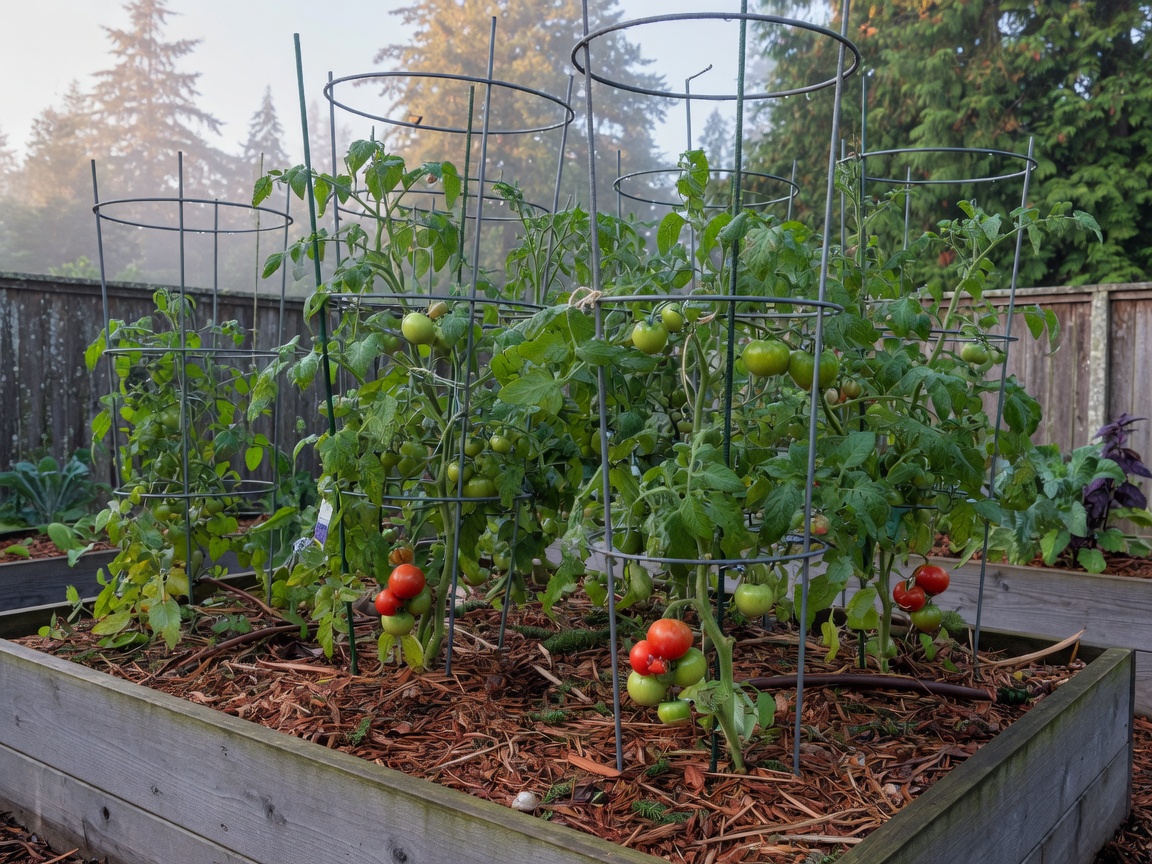
Install support at planting. For indeterminates, single- or double-leader systems improve light and spray/air penetration; remove suckers below the first cluster with intent. Strip soil-contact leaves. At regional late-blight risk, remove symptomatic tissue immediately—latency is not a management plan.
Graduate extension: heat units & cultivar strategy
Early cherries and processing types outperform long-season beefsteaks in most foothill years. Cool-summer cultivars exist because prior growers already failed the hard way—read maturity days. Plastic mulches raise root-zone temperature; wall heat and temporary protectors advance spring establishment. Giant heirlooms require the warmest microclimate on the property and an adult relationship with October.
Biotic stress
Aphids, Manduca hornworms, flea beetles on seedlings, BER, cracking, foliar fungal/oomycete complexes. Integrated response: culture first (site, water, airflow), then physical/biological, then labeled chemistry. See pests module.
Harvest & postharvest
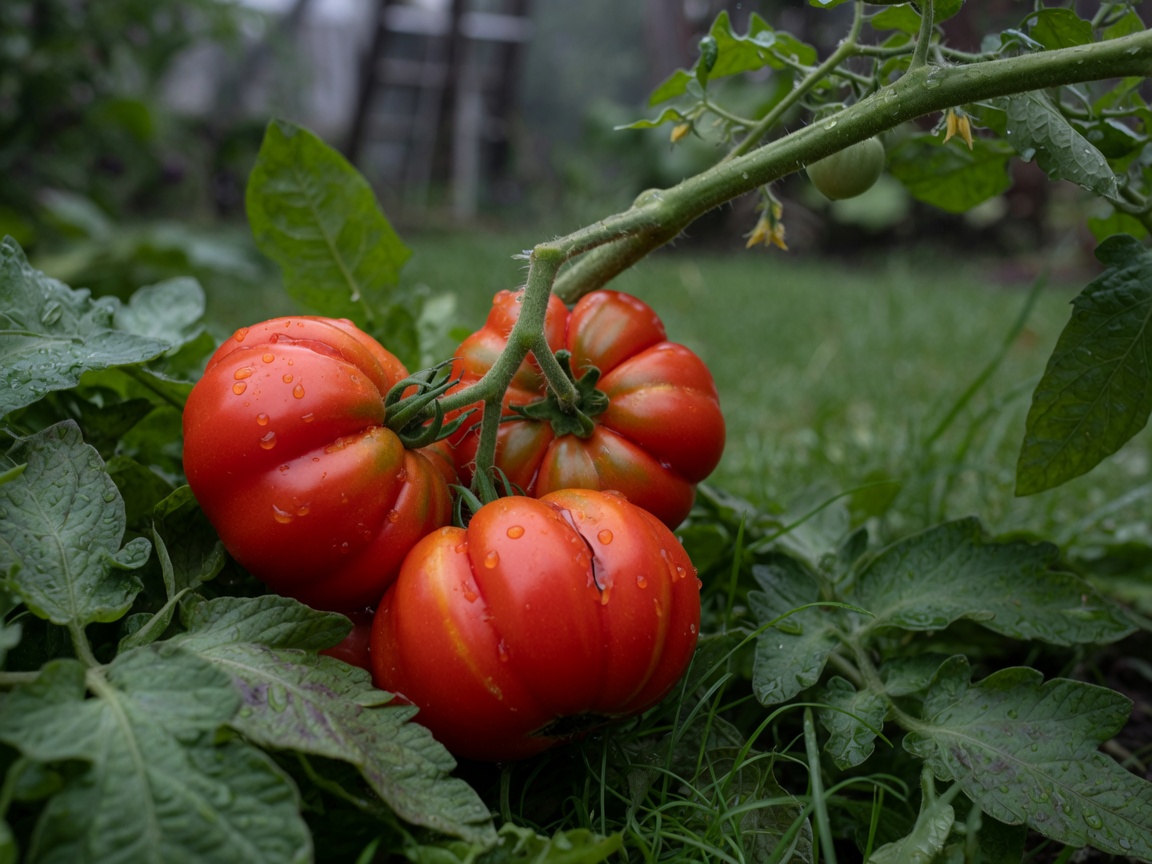
Harvest at cultivar-true full color, or breaker stage if frost/slug pressure forces it, and finish indoors. Refrigeration of ripe fruit collapses volatiles. If you prefer mealy tomatoes, that is a preference—not a best practice.
Unit close
Early cultivar → hottest site → even irrigation → restrained N → trained canopy. Novices who skip that sequence grow foliage. You are here to grow fruit. Act like it.