The brief you actually need
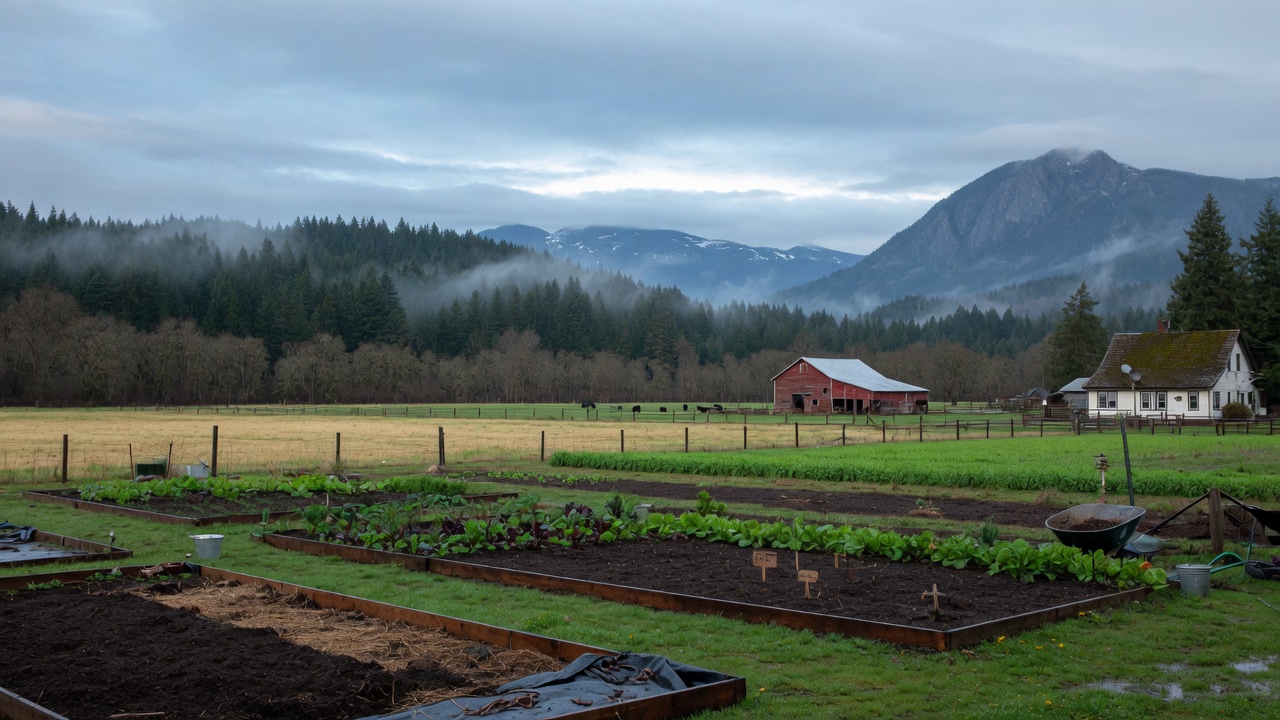
North Bend sits in the Snoqualmie Valley at the western foot of the Cascades. Marine air still rules—mild winters, rarely brutal cold—but you’re inland enough that summer nights run cool and morning fog can cancel “full sun” like a flaky coworker. Winters deliver long, wet stretches that murder Mediterranean herbs if drainage is a suggestion rather than a design feature.
Use USDA Zone ~8a as your winter-hardiness baseline (verify with a local station or recent maps; microclimates shift this). Hardiness zones answer “will this die in January?” They do not answer “will my tomatoes ripen in August?” That’s heat-unit and day-length territory, and North Bend is stingy with both compared to eastern WA.
Frost, fog, and the cult of “last frost”
Treat last spring frost around mid-to-late April and first fall frost around mid-to-late October as working averages—not sacred law. Valley bottoms pond cold air; open flats can frost when a hillside three blocks away shrugs. Keep row cover and a cheap min-max thermometer. If you plant tender tomatoes on April 12 because a blog said so, this course will send a sympathy card and a late blight pamphlet.
Failure mode
“Full sun” means 6–8+ hours of direct light. In North Bend, tree shade + mountain shadow + June gloom can leave you with “full sun on paper, part shade in spirit.” Walk your yard at 9am, noon, and 4pm before you buy a dwarf apple.
Microclimates worth exploiting
- South-facing walls & fences: Radiate heat, extend the season for tomatoes, peppers, and underripe attitude.
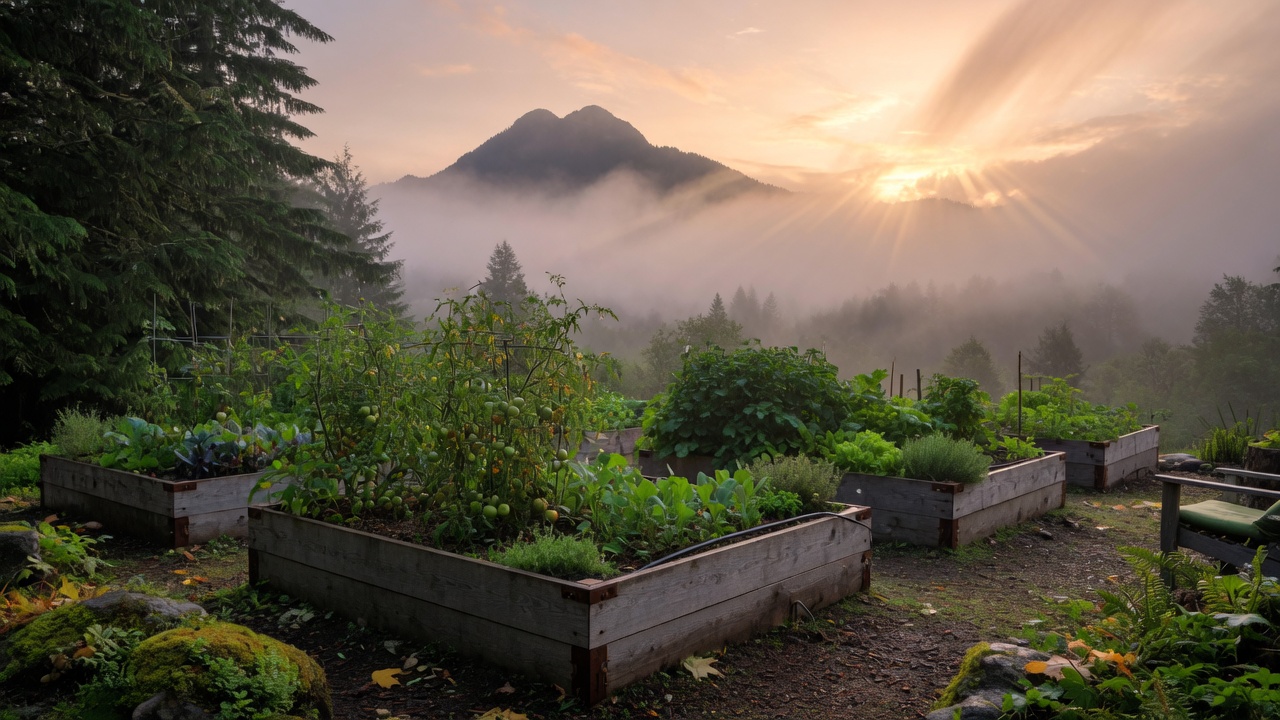
- Raised beds: Warm earlier in spring, drain faster in winter—mandatory for roots and Mediterranean herbs on clay.
- Cold air drains: Don’t put tender perennials at the lowest point of a slope unless you enjoy frost fanfic.
- Wind corridors: Valley winds dry foliage (good for disease) and desiccate young transplants (bad for your ego).
Seasonal personality disorder
| Season | What the sky does | What you do |
|---|---|---|
| Late winter | Cold rain, short days | Prune fruit, start alliums/spinach under cover, soil tests |
| Spring | Unreliable, soggy, hopeful | Harden off slowly; don’t trust one warm weekend |
| Summer | Often mild; dry stretch possible | Actually irrigate; chase heat units; watch blight humidity |
| Fall | Rain returns with a vendetta | Harvest, mulch, plant garlic/cover crops, protect herbs |