First commandment: test, then sass
Get a basic soil test (pH, organic matter, major nutrients). North Bend yards often sit acidic (pH ~5.0–6.2) under conifers or on native profiles. Most vegetables prefer ~6.0–7.0; blueberries and some ornamentals like it lower. Lime is a tool, not a personality.
Texture, drainage, and the winter death sentence
Heavy silt/clay holds nutrients and water—and holds plant roots hostage in January. For Mediterranean herbs (lavender, rosemary, thyme, sage), drainage is non-negotiable. For carrots, compaction is a crime. Raised beds (10–16"+) filled with a blended loam/compost mix are the local cheat code.
Target structure (annual veg beds)
~40–50% quality topsoil/loam, 30–40% mature compost, 10–20% aeration (coarse grit/perlite/pumice as needed). Avoid pure bagged “garden soil” that turns to pudding by November.
Organic matter: the only religion we endorse
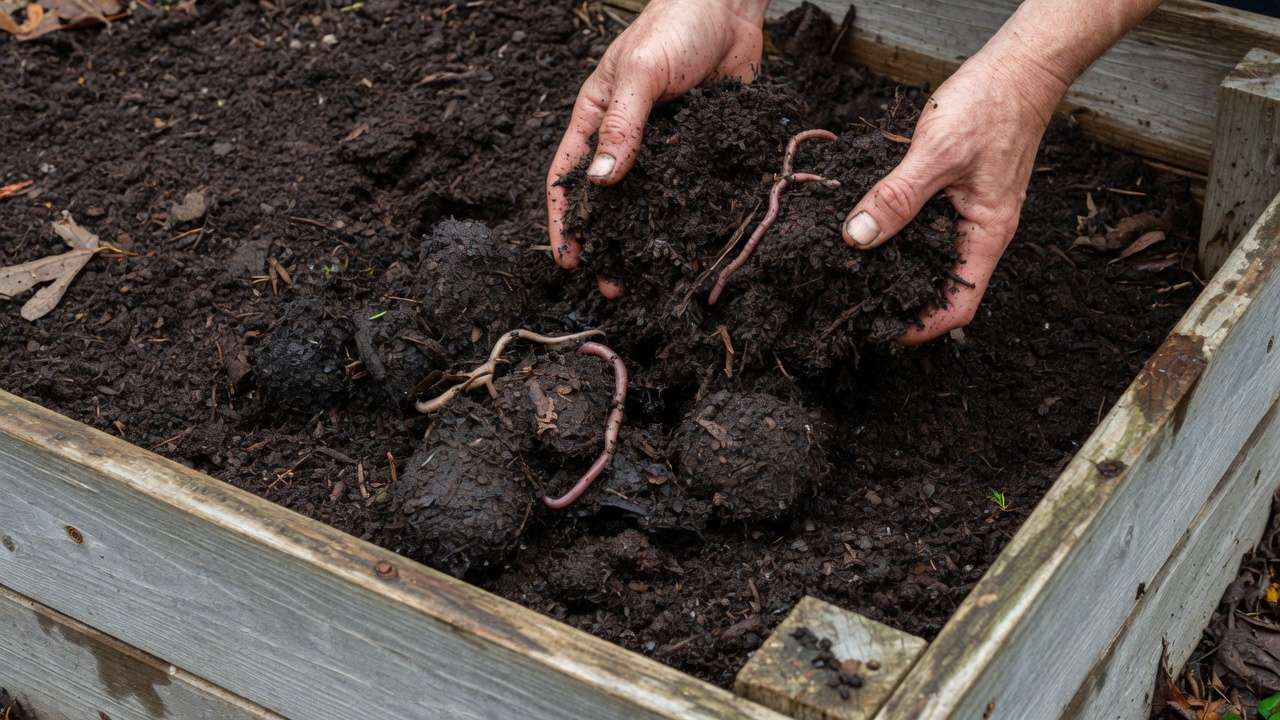
Aim for beds that smell like forest floor, not like a wet sock. Annual top-dress of ½–1" compost in spring; heavier applications when building new beds. Leaf mold is free and morally superior. Fresh manure in spring is how you burn roots and grow regrets—compost it first.
Fertilizer without the crystal healing
Plants need nitrogen (N), phosphorus (P), potassium (K), plus calcium, magnesium, and micronutrients. College-level version: match supply to crop demand and growth stage.
| Crop type | Fertility vibe | Local tip |
|---|---|---|
| Leafy greens | Steady N | Side-dress with compost tea or balanced organic feed mid-season |
| Fruiting (tomato) | Moderate N; don’t go feral | Excess N = jungle, no fruit; calcium + even water for blossom end rot |
| Roots (carrot) | Low-moderate N, loose soil | High N → tops over roots; skip fresh manure |
| Mediterranean herbs | Lean-ish, sharp drain | Overfeeding + wet = soft growth, winter kill |
| Fruit trees | Modest, timed | Feed in spring; avoid late high-N that delays dormancy |
| Hops | Hungry climbers | Rich soil + steady water during bine run |
Application rules that keep you honest
- Follow label rates—more is not “organic vigor,” it’s runoff and salt stress.
- Water in granular feeds; don’t dump on dry foliage.
- Mulch after feeding to buffer the next atmospheric river.
- Re-test every 2–3 years if you’re amending aggressively.
Failure mode
If your soil is waterlogged for weeks, no fertilizer brand will save you. Fix drainage or raise the bed. Chemistry cannot redeem hydrology.